How It Works
The Insulation Apprenticeship Program, Explained
“Apprenticeship” means different things depending on which corner of the insulation trade you're headed toward. Below are the five real paths people use to get in — union and non-union — with the actual time commitment, requirements, and where to apply for each one.
Union Apprenticeship (Mechanical Insulation)
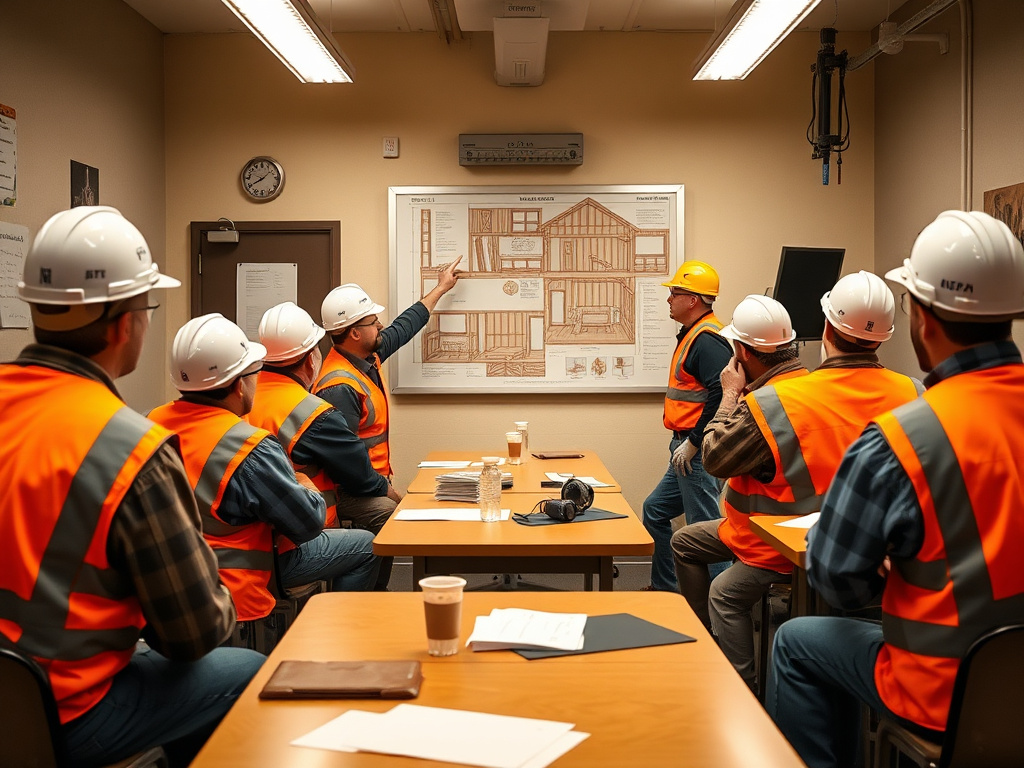
A registered, 4- to 5-year earn-while-you-learn program run through local Joint Apprenticeship and Training Committees (JATCs) tied to the International Association of Heat and Frost Insulators and Allied Workers (the insulators' union — not IUPAT, which represents painters and finishing trades, not insulators).
- •Combines paid on-the-job training with classroom instruction (commonly cited around 1,600-1,800 OJT hours per year plus roughly 144 classroom hours per year, though exact hours are set by each state apprenticeship standard and can vary by local)
- •Classroom instruction commonly covers OSHA 10/30, asbestos and lead mitigation, firestopping, energy-audit calculations, and CPR/First Aid
- •Wages step up in stages toward full journeyman pay as you progress — the exact schedule is set locally, so ask your JATC for their current wage sheet rather than assuming a fixed percentage
- •Apprentices typically receive health insurance and pension contributions alongside wages
- •Leads to mechanical insulator work: pipes, ductwork, boilers, steam lines, tanks and vessels in commercial and industrial settings
Best for: People who want a structured, credentialed path into mechanical insulation with benefits and a defined wage ladder from day one.
Source: insulatorsjatc.orgOn-the-Job Training (Residential/Commercial Installer)

Most floor, ceiling, and wall insulation installers enter the trade through informal on-the-job training with an experienced installer rather than a formal apprenticeship. No college degree is required, and many contractors will train someone who shows up ready to work.
- •You typically start by shadowing an experienced installer — keeping the job site organized, learning technique, and following direction before working independently
- •Work covers fiberglass batt installation, blown-in/loose-fill cellulose or fiberglass, mineral wool batts, and (with additional training) spray foam application
- •No set educational requirement — this is the fastest way to start earning in the trade
- •Pay typically starts below journeyman/union scale and grows with experience and the contractor you work for
Best for: People who want to start working and earning immediately, without a multi-year commitment up front.
Source: BLS Occupational Outlook HandbookSpray Foam (SPF) Manufacturer Certification
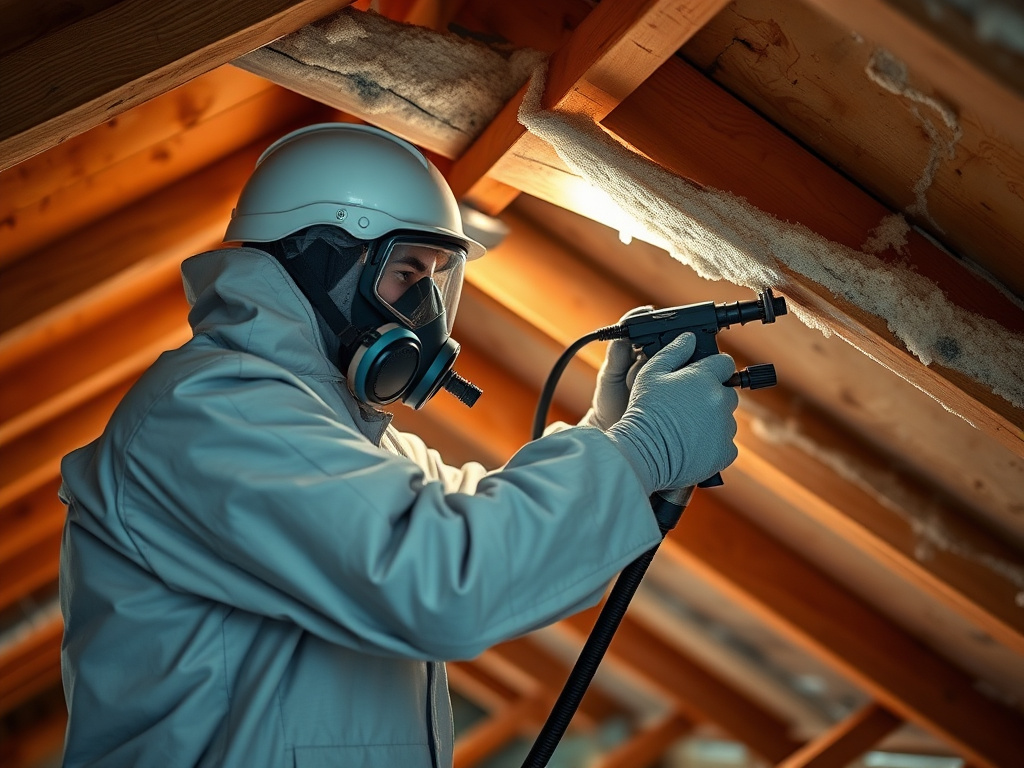
A fast, focused path specifically for spray polyurethane foam. Manufacturers like BASF and Icynene (Huntsman Building Solutions) run their own contractor training — typically two to five days of classroom instruction plus hands-on spray application practice.
- •Manufacturer-run courses teach equipment operation, chemical handling (A-side/B-side), mixing ratios, curing, and safety
- •Some certifications are backed by third-party quality assurance review of the training and evaluation process
- •The Spray Polyurethane Foam Alliance (SPFA) also runs an industry-wide, ISO-17024-aligned certification with four tiers — SPF Assistant (no experience required) through SPF Installer-Apprentice, Master Installer, and Project Manager
- •The Installer tier of the SPFA program requires a documented 100,000 board-ft/sq-ft of spray experience, though you can start the process before hitting that number
Best for: People who already have some installation experience and want to specialize in spray foam, or contractors bringing a new hire up to speed on SPF specifically.
Source: SPFA Professional Certification ProgramJob Corps (HPIP Program)
High Performance Insulation Professionals (HPIP) is the U.S. Department of Labor-approved insulation training provider inside the Job Corps system — a free, government-run education and training program for eligible young people ages 16-24.
- •HPIP runs Entry Level coursework (live since 2017) and an Intermediate Level course added in 2020
- •Active in 55 Job Corps centers nationwide, with over 4,700 students enrolled cumulatively
- •Combines classroom instruction with hands-on training inside the broader Job Corps residential/vocational program
- •A realistic option for young people who want housing, a stipend, and a trade credential without existing work experience
Best for: Young people (16-24) who want a structured, government-supported path that includes housing and a stipend while training.
Source: HPIP — insulationtraining.orgCommunity College / Vocational Program
Some community colleges and trade schools offer construction or building-science coursework — certificate or associate-degree tracks — that can prepare you for entry-level insulation work or strengthen an application into a union apprenticeship.
- •A high school diploma or GED is the typical baseline requirement
- •Coursework often covers building science fundamentals, blueprint reading, and safety alongside hands-on practice
- •Can be a stepping stone into a union JATC apprenticeship or straight into an installer job with a contractor
Best for: People who want classroom-based fundamentals before starting fieldwork, or who are weighing insulation against other trades.
Source: TradeCareerPathQuestions
Frequently Asked Questions
How do I become an insulation apprentice?+
There are two main routes. For mechanical insulation (pipes, ductwork, boilers), apply through a local Joint Apprenticeship and Training Committee (JATC) tied to the insulators' union — start with an online interest form at insulatorsjatc.org, and a JATC representative will follow up with that local's specific requirements. For residential/commercial installation, most people start with a contractor willing to train on the job — no formal application process, just a willingness to learn and show up consistently.
Is the insulators' union the same as IUPAT?+
No. IUPAT (International Union of Painters and Allied Trades) represents painters, drywall finishers, glaziers, and other finishing trades — it does not represent insulation installers. Insulators have their own union, the International Association of Heat and Frost Insulators and Allied Workers, with apprenticeships run through the Insulation Industry International Apprenticeship and Training Fund (IIIATF) and local JATCs.
Do I need a license or certification to install insulation?+
For general residential and commercial insulation installation, there's typically no state license required, and no specific formal education requirement according to federal labor data. Spray polyurethane foam (SPF) work is where certification matters most — manufacturers like BASF and Icynene run their own contractor certification, and the Spray Polyurethane Foam Alliance runs an industry-wide certification program with four experience tiers.
What's the first day of an insulation apprenticeship like?+
Early on, you'll typically shadow an experienced installer rather than work independently — learning proper technique, keeping the job site organized, and following direction. You'll be introduced to the materials (fiberglass batt, blown-in cellulose, mineral wool, and eventually spray foam) and basic safety practices before you're given more independent work.
How long does an insulation apprenticeship take?+
A union mechanical insulator apprenticeship is typically a 4- to 5-year Registered Apprenticeship Program combining paid on-the-job training with classroom instruction. Non-union entry through on-the-job training with a residential/commercial contractor can have you working productively within weeks to a few months, though you'll keep building skill for years. Manufacturer spray foam certification courses run 2-5 days.
Do I need OSHA 10 or OSHA 30 to install insulation?+
Neither is federally required by OSHA itself for every installer, but a number of states and localities require them — including OSHA-30 for supervisors on covered projects in states like Connecticut, Massachusetts, and New York. Union apprenticeship curricula commonly include OSHA 10/30 as part of standard classroom instruction, so most apprentices complete it regardless of whether their state mandates it.
What are the physical demands of insulation work?+
Insulation work is physically demanding: standing and moving through a full work day, lifting and carrying insulation materials, working in confined spaces like attics and crawl spaces, and — for some roles — working at height or outdoors in extreme temperatures. Mechanical insulators in particular may work in unheated buildings or industrial settings. It's a hands-on trade, not a desk job.
How much do insulation apprentices make?+
Apprentice wages typically increase in stages toward full journeyman pay as you progress through a union apprenticeship — the exact schedule is set by each local, so ask for their current wage sheet rather than assuming a fixed number. According to the U.S. Bureau of Labor Statistics, the median pay for all insulation workers was $50,730 per year in 2024, with mechanical insulators (who typically complete a full apprenticeship) earning a higher median of $57,250 versus $48,680 for floor/ceiling/wall installers.
What's the career path after finishing an apprenticeship?+
The common progression is apprentice to journeyman (after completing the apprenticeship), then foreman, then into roles like superintendent, estimator, or project manager — and for some, eventually starting their own insulation contracting business. Foreman roles typically add responsibility for estimating materials and labor and keeping a job on schedule and on budget.
Is insulation work in demand?+
The Bureau of Labor Statistics projects 4% job growth for insulation workers from 2024 to 2034 — about as fast as the average for all occupations — with roughly 5,700 job openings projected per year on average over the decade, factoring in both growth and the need to replace workers who leave the field.
Should I go union or non-union?+
It depends on what you're optimizing for. A union apprenticeship gives you a structured, credentialed 4-5 year path with benefits and a defined wage ladder, best suited to mechanical insulation work. Non-union, on-the-job training gets you earning faster with less commitment up front, and is the more common path into residential and commercial installation. Neither is universally "better" — they lead to different kinds of insulation work.
What if I want to specialize in spray foam instead?+
Spray foam has its own certification track separate from a general insulation apprenticeship. Manufacturers like BASF and Icynene run 2-5 day contractor training courses, and the Spray Polyurethane Foam Alliance runs a four-tier industry certification (Assistant, Installer-Apprentice, Master Installer, Project Manager) that documents your experience level as you grow in the specialty.
Ready to Find a Program?
See how to search for a program in your region, or reach out and we'll help point you in the right direction.